Preparing for launch. Our gift shop opens 23 October 2026.
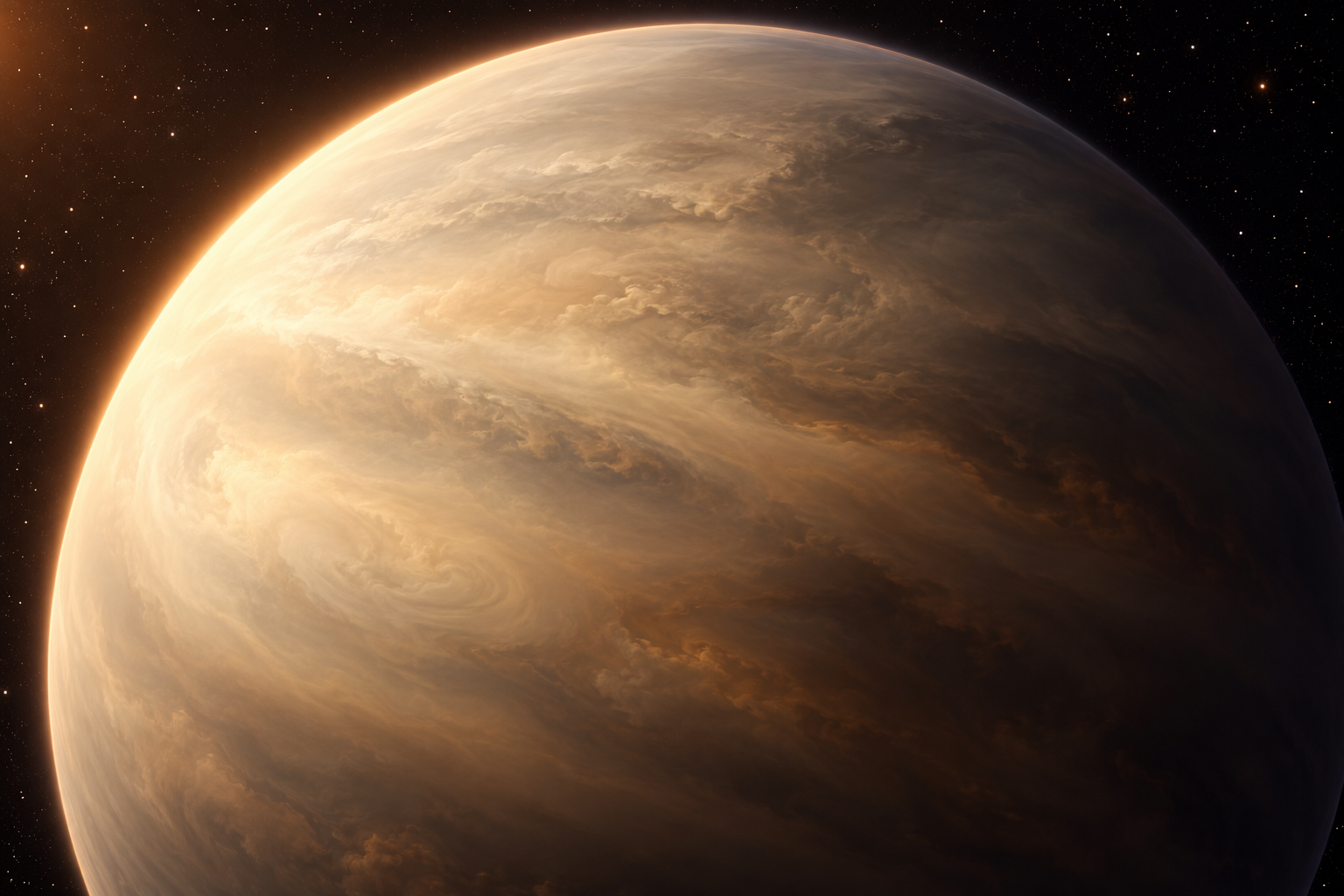
GJ 1214 b · Artist's Reconstruction

Buy A Galaxy · original commissioned reconstruction

Artist's Reconstruction · View astronomy source

Artist's ReconstructionFull image credit, source & interpretation

Artist's reconstruction based on published astronomical observations and current scientific understanding.

A real exoplanet. A very personal interpretation.

GJ 1214 b

Official catalogue designation: GJ 1214 b

Your name for it: Planet Brenda

A warm sub-Neptune whose thick, reflective atmospheric haze hides the deeper layers from view.

Planet type
Warm sub-Neptune
Distance from Earth
c. 48 light-years
Constellation
Ophiuchus
Planet radius
c. 2.73 × Earth
Host star
GJ 1214
Orbital period
c. 1.6 days

Values are rounded estimates and may be refined by further observations. Personal names remain ceremonial.

Claim This Planet

A personalised planet gift preview. No order or reservation is made.

Make it theirs

Give infinity a personal touch.

For example, Planet Brenda. Completely unofficial. Up to 60 characters.

At launch, digital editions are available worldwide. A4, A3 and Framed A3 packages are available in the UK, with international print delivery planned.

Your gift format

Illustrative launch pricing. Ordering opens on 23 October 2026.

A3 Print Package

A3 poster + A4 printed certificate. Information sheet included.

Paper sizes shown in proportion. Tap either piece to inspect your personalisation.

Live preview · your selected galaxy and personalisation.
Registration number is a demonstration, not a saved registry entry. Artwork image credit

A world with a story

More than a beautiful planet.

Host star
GJ 1214
Star type
M-type red dwarf
Planet radius
c. 2.73 × Earth
Planet mass
8.41 × Earth
Orbital period
c. 1.6 days
Orbital distance
0.01505 AU
Discovery
2009 · Transit

Values are rounded from published catalogue measurements. Sky coordinates identify the host system, not a resolved planetary surface.

A world behind a veil

GJ 1214 b is smaller than Neptune but larger than Earth. The term sub-Neptune describes its size range; it does not identify an Earth-like surface underneath. Its substantial atmosphere makes it an excellent subject for studying an unfamiliar class of planets.

Where is GJ 1214 b?

It orbits a red dwarf in Ophiuchus, around 48 light-years from Earth. The close orbit takes roughly 1.6 days. Its host is cooler and smaller than the Sun, but the planet still receives substantial heating at this distance.

What hides the deeper atmosphere?

Webb observations revealed a highly reflective atmosphere and helped measure day-to-night temperatures. Aerosols or haze obscure deeper features. Atmospheric composition remains an active question; describing a water-rich interior as established fact would go beyond what the image can show.

What might a hazy world look like?

Our reconstruction uses muted amber, cream and bronze light across dense haze. The exact colour and visible layering are interpretive. The absence of exposed geology in the artwork reflects the atmospheric obscuration rather than a photographed cloud deck.

How was it discovered?

The catalogue records a transit discovery in 2009. The planet’s repeated passages across its small star make its size measurable and offer opportunities to study the atmosphere through spectroscopy.

A quieter kind of spectacular

This planet poster suits someone drawn to subtle atmosphere rather than molten drama. Give the gift a ceremonial title and dedication; the actual designation, host and orbital details keep the astronomy grounded.

Science, with sources.

Checked 30 September 2026. The source organisations do not endorse this gift.

Other corners of the universe

Quite different neighbours.

A closer look

Protected preview. Final prints and paid digital files are supplied without watermarks.

Open protected preview